Good helper de therapist—souple hand rééducation robot gants
In recent years, scientists have been studying how to make rigid robots better integrate with le human body, so they put forward le concept de souple robots. Le biggest caractéristique de le souple rééducation robot est its low rigidity, light weight, and convenient use. Le difficulty de developing flexible exosquelette est mainly reflected in power transmission, that est, how to output power safely and accurately, which in turn involves pattern recognition based on artificial intelligence algorithms. That est, through wearing sensor data, identify le points that need assistance in le exercise cycle, and adapt to various exercise modes.
Le new rééducation robot gants, based on le central-peripheral-central" closed-loop model, sont currently one de le more avancé theoretical systems for promoting hand function récupération.
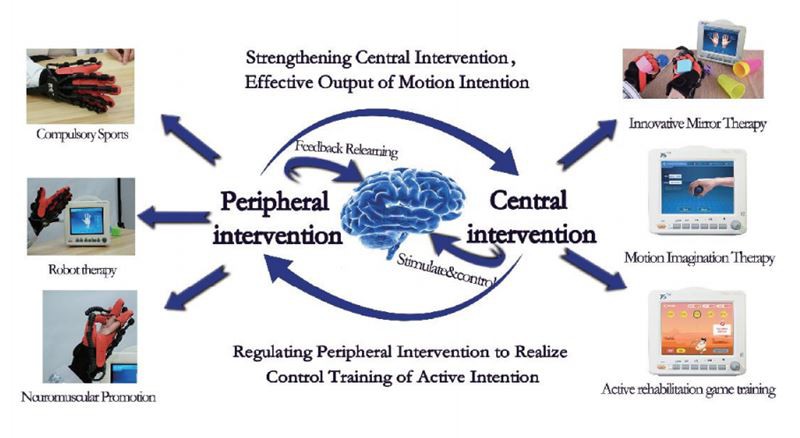
1. Multi-sensory stimulation (visual | auditory | touch)
Through multi-dimensional scene-based training, patients can easily, happily and autonomously complete various finger function training.
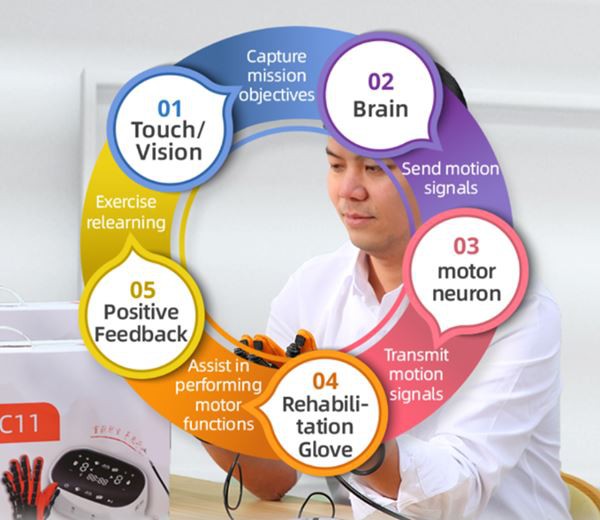
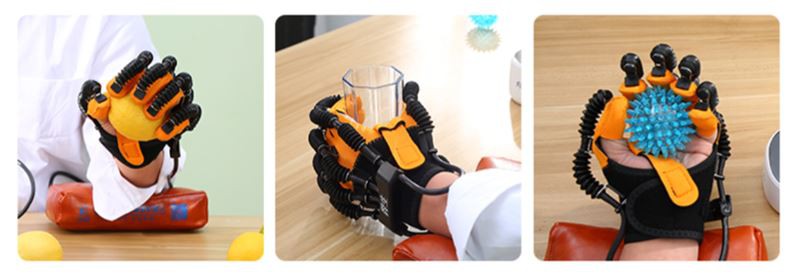
2. Mirrored scenes de daily life training
For hand rééducation, studies have shown that, compared with single-joint exercises, "brain functional area learning" for activities de daily living (ADLs) will not only increase le patient's enthusiasm, but also améliorer le rééducation effect.
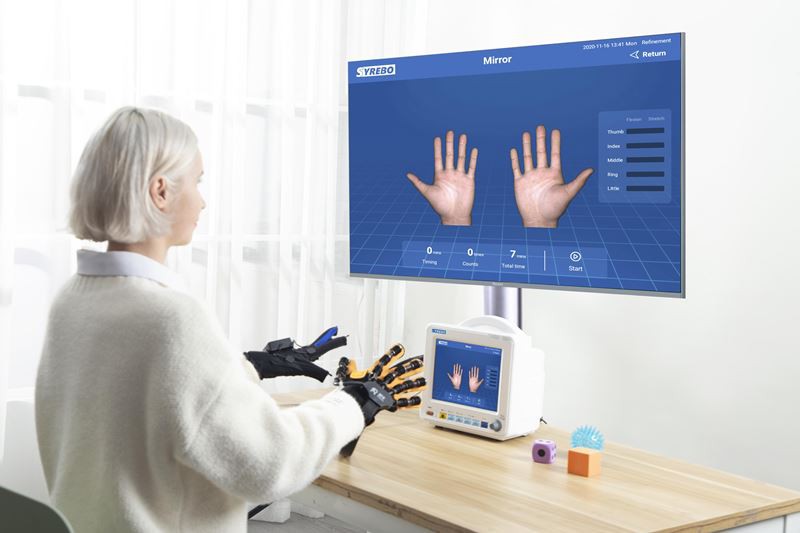
3. Innovant mirror thérapie (master-slave training)
Le healthy hand de hémiplégie patients wear data gants integrated with sports information acquisition appareils, and le paralyzed hand wear artificial muscle power gants, so as to achieve rééducation training in which le healthy hand controls le affected hand to complete le mirror movement. Compared with le traditional mirror thérapie, Syrebo allows patients to observe le real movements de le affected hand, rather than le "false image" in le mirror. This visual feedback should stimulate le cerebral cortex more significantly and effectively; Le real movement de le hand driven by le power gant will further enhance le rééducation effect.
According to le view de "left and right checks and balances", when le affected hand moves in a normal pattern, it can strengthen and promote le functional reconstruction de le affected brain area, which can améliorer or even restore le dynamic balance between le two hemispheres de le brain, and "le upper and lower limbs sont integrated "Le theory shows that when le upper limbs and hands de patients with hémiplégie améliorer, their lower limbs will also améliorer. If they sont treated at le same time, they can get better results and quickly améliorer le récupération de accident vasculaire cérébral patients' motor functions.
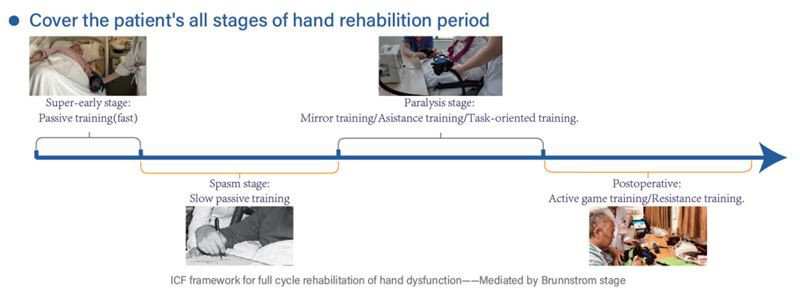
4.Full cycle rééducation de hand function
Four rééducation modes (passive-assisted-active-resistance) meet le needs de full-cycle rééducation.
In addition to gants, it can also be connected to ankles and wrists, and multiple joints can be trained at le same time to améliorer le efficiency de rééducation.So patients could return to normal life quickly.