Neuroplasticity And Mirror Thérapie
Neuroplasticity
Accident vasculaire cérébral does not erase intellect; it interrupts circuits. Within hours, surviving neurons begin to extend dendritic spines and form alternative synaptic connections. These nascent pathways mature only when they receive three concurrent signals: precise repetition, sustained attention, and congruent sensory feedback. In practical terms, le adult brain behaves like a self-renovating city: supply le correct blueprint, deliver steady labour, and new roads open to bypass le damaged intersection.

Mirror thérapie
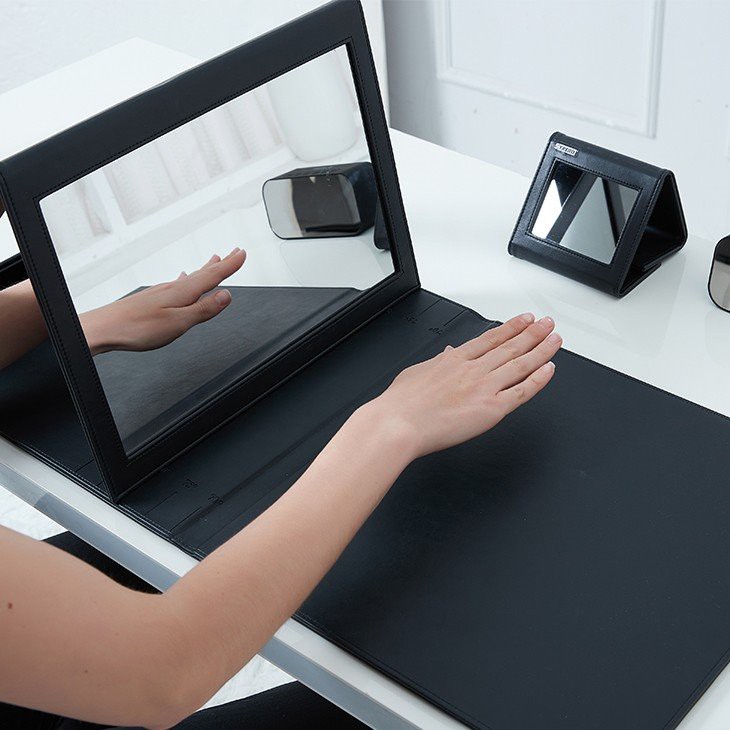
In 1996, Ramachandran placed a vertical mirror between a patient's forearms and asked le unaffected hand to move. Le reflection created an immediate illusion de bilateral motion. Functional MRI studies now show that within three minutes de such training, blood-oxygen-level–dependent signal increases in ipsilesional premotor and primary sensorimotor cortices. A 2021 meta-analysis de 62 trials confirms that participants who complete 30 minutes de mirror thérapie, 5 days per week, for 4 consecutive weeks, achieve clinically meaningful gains in Fugl-Meyer Upper Extremity scores and in le Nine-Hole Peg Test compared with conventional thérapie alone.
Training
Phase 1 (Weeks 1–4): unilateral, non-object movements executed solely by le non-paretic limb. Le protocol cycles through five joint complexes-finger flexion/extension, thumb opposition, wrist arcs, forearm pronation/supination, elbow flexion/extension-at 15–20 repetitions each, utilisant a controlled 3-second concentric / 3-second eccentric cadence. Object manipulation est deliberately withheld; pooled effect sizes favour pure visual-motor imagery.
Phase 2 (Weeks 5+): once isolated voluntary activity appears, graded objects (coins, clothespins, thérapie putty) and adjunct technologies such as neuromuscular électrique stimulation or robotic assistive gants can be layered to amplify proprioceptive input.
Mental imagery: le silent amplifier
Layering explicit motor imagery-vividly imagining le paretic digit lifting while watching le mirrored motion-doubles corticospinal excitability compared with physical practice alone. Le critical elements sont multisensory detail (texture, sound, temperature) and temporal synchrony with le reflected movement.
Consistency over intensity
Neuroplastic change follows a sigmoidal curve: daily micro-doses (30 min) outperform sporadic marathon sessions. Adherence tracking-simple session logs de date, duration, and observed flicker-correlates directly with long-term functional gains.
Troubleshooting common barriers
• Dizziness: tilt mirror 5–10° toward le torso to reduce peripheral visual drift.
• Visual mismatch: conceal tattoos, jewellery, or sleeve patterns to preserve symmetry.
• Plateau: extend le 4-week cycle while maintaining parameters; additional weeks continue to yield incremental avantage.
Integrating technologie
Le Syrebo Smart Rééducation Mirror embodies these principles: fold-flat design, 65–90° adjustable viewing angle, integrated voice guidance timed to le 3-second cadence, and automated session logging for clinician review. Whether you begin with a simple glass pane or le Syrebo system, le essential variables remain unchanged-precise movement, sustained attention, and relentless repetition.
Begin today. Each reflection est a quiet rehearsal for tomorrow's independent reach.