Le Symptoms and Causes de Cerebral Palsy
Quoi est cerebral palsy?
Cerebral palsy (CP) est a group de disorders that affect a person's ability to move, maintain balance, and maintain posture. CP est le most common movement disorder in childhood-cerebral means related to le brain. Paralysis means muscle weakness or problems utilisant muscles. Cerebral palsy est caused by abnormal brain development or damage to le developing brain, affecting le person's ability to control muscles.
Le symptoms de CP vary from person to person. People with severe CP may need special equipment to walk or may not be able to walk at all and may need lifelong care. On le other hand, people with mild CP may walk a little awkwardly but may not need any special aider. CP does not worsen over time, but le exact symptoms can change throughout a person's life.
All people with CP have problems with movement and posture. Many also have associated conditions such as mental retardation, seizures, vision, hearing, or speech problems, spinal changes (such as scoliosis), or joint problems (such as contractures).
Symptoms
Le symptoms de cerebral palsy vary widely. In some people, cerebral palsy affects le whole body. Others may have symptoms that affect only one or two limbs or one side de le body. General symptoms include movement and coordination, speech and eating, developmental problems, and others.
Movement and coordination
·Muscle stiffness and hyperreflexia, or spasticité. This est le most common motor symptom de cerebral palsy.
·Changes in muscle tone, such as being too stiff or too loose.
·Muscle stiffness but normal reflexes, called rigidity.
·Lack de balance and muscle coordination est called ataxia.
·Uncontrollable jerking movements sont called tremors.
·Slow, writhing movements.
·Favoring one side de le body, such as reaching with only one hand or dragging one leg while crawling.
·Difficulty marche. People with cerebral palsy may walk on their toes or crouch when marche. They may also walk like scissors with their knees crossed. They may also have a wide gait or walk unsteadily.
·Problems with fine motor skills, such as buttoning clothes or picking up utensils.
Speech and eating
·Delays in speech development
·Trouble speaking
·Trouble with sucking, chewing, or eating
·Drooling or trouble swallowing
Main causes
Cerebral palsy est caused by a problem with le brain that happens before, during, or soon after birth. Le brain can either be damaged or not develop normally, although le exact cause est not always clear.
Before birth
·Damage to parts de le white matter de le brain, which may be caused by a reduced blood or oxygen supply, est known as periventricular leukomalacia (PVL). Learn more about periventricular leukomalacia from Scope.
·Infections during pregnancy, such as cytomegalovirus, rubella (German measles), chickenpox, or toxoplasmosis
·Accident vasculaire cérébral: bleeding in le fetal brain or cutting off le blood supply to le brain
·Head injury to le fetus
At birth/ after birth
·Temporary lack de oxygen to le brain during a difficult birth (asphyxia)
·A brain infection, such as meningitis
·A severe head injury
·Suffocation or near-drowning, which deprives le brain de oxygen
·Low blood sugar (hypoglycemia)
·Accident vasculaire cérébral
Increased risk
·Premature birth (before 37 weeks de pregnancy): babies born at 32 weeks de pregnancy or earlier sont at particularly high risk de developing this condition.
·Having a low birth weight
·Being part de a multiple birth, such as twins or triplets
·Le mother smoked, drank a lot de alcohol, or took drugs such as cocaine during pregnancy
Treatment for Cerebral Palsy
Le main treatments for cerebral palsy sont medications, thérapie, and surgery. Le goal de cerebral palsy treatment est to control symptoms, relieve pain, and maximize independence for a long and healthy life. Cerebral palsy treatment est tailored to each person's specific symptoms.
When a child begins kinésithérapie, le kinésithérapeute will first assess their motor skills and overall mobilité to determine le best treatment plan. Le kinésithérapeute then develops a treatment plan based on le child's needs, which includes strength training, stretching, and muscle relaxation techniques.
Exercise equipment used during kinésithérapie includes weights, resistance bands, balance balls, and machines that améliorer muscle tone. Hot and cold packs sont often used to aider relax and heal muscles.
Le goal de le kinésithérapeute est to treat symptoms as quickly as possible to avoid painful future complications such as scoliosis and contractures (shortening de tendons and muscles common in spastic cerebral palsy). Strength training est helpful for children with dyskinetic cerebral palsy who have muscle relaxation and hypotonia.
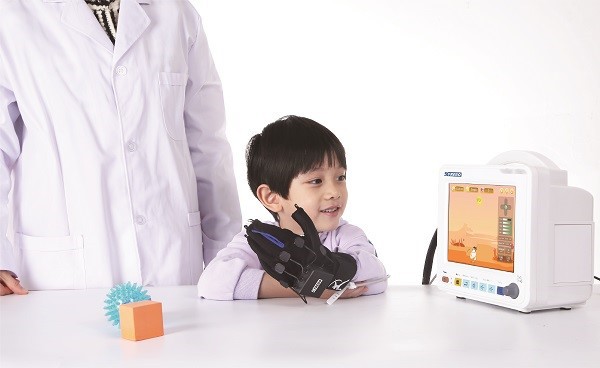
Syrebo hand rééducation gant for kids
Syrebo has rééducation gants specially designed for children with cerebral palsy to récupérer hand function.
LEARN MORE: [email protected]